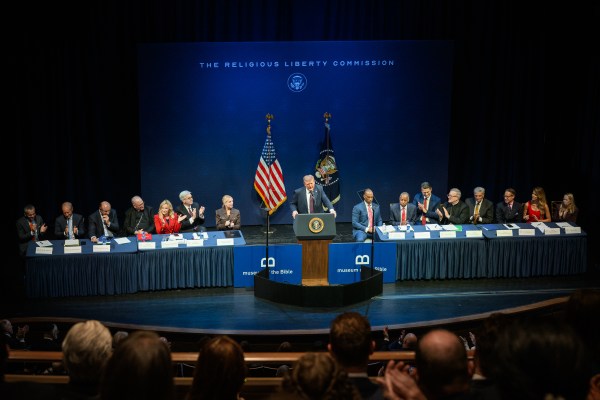
“An overview of President Donald Trump’s address to the White House Religious Liberty Commission, highlighting his administration’s stance and initiatives on protecting religious freedom both domestically and internationally.”
On Wednesday, President Donald Trump delivered remarks to the White House Religious Liberty Commission, a body established to advise the administration on policies concerning religious freedom. The president’s address focused on what he views as his administration’s commitment to defending religious rights, both within the United States and abroad. The speech underscored a core tenet of his political platform and resonated deeply with his supporters.
Key Themes of the Address
President Trump began his remarks by reaffirming his administration’s dedication to protecting freedom of worship, a principle he has consistently championed. He highlighted several actions taken under his leadership, including the appointment of conservative judges who, he stated, would uphold constitutional protections for religious expression.
A central theme of the president’s speech was the idea that religious liberty is not just an American right but a fundamental human right. He spoke passionately about the persecution of religious minorities in other parts of the world, specifically mentioning Christians, Jews, and other faith groups facing oppression. He pledged to continue using the tools of American diplomacy to advocate for their protection, positioning the United States as a global leader in this fight. This aligns with his administration’s establishment of the International Religious Freedom Alliance, a coalition of nations dedicated to combating religious persecution.
Domestic Policy and the Role of Faith
Domestically, the president focused on policies that he believes have strengthened religious institutions. He cited the repeal of the Johnson Amendment, which he argued had been used to silence religious leaders by threatening their tax-exempt status. He also reiterated his support for faith-based organizations, stating they are vital to the fabric of American society and should be empowered to serve their communities without government interference. He framed these actions as a return to the foundational principles of the nation, emphasizing the importance of faith in the public square.
President Trump also took the opportunity to address some of the cultural conflicts surrounding religious practice in modern America. He emphasized that people of faith should not have to choose between their beliefs and their participation in public life. This part of his speech was a clear signal to his base that he would stand with them on issues related to conscience and moral convictions.
A Continuing Conversation
The president’s remarks to the White House Religious Liberty Commission were more than just a speech; they were a reinforcement of his political identity and a clear statement of his administration’s priorities. For his supporters, the address was a welcome assurance that their concerns are being heard and acted upon. For critics, the speech may be seen as a continuation of policies that they believe blur the line between church and state. Regardless of one’s perspective, the address highlights the enduring importance of religious liberty as a topic of national and international debate.
About The Author