“An analysis of U.S. President Donald Trump’s reaction to the Strategic Mutual Defense Agreement between Pakistan and Saudi Arabia and the geopolitical implications for the Middle East and South Asia.”
The recently signed Strategic Mutual Defence Agreement (SMDA) between Pakistan and Saudi Arabia has sent ripples across the geopolitical landscape. While the pact has been hailed by Islamabad and Riyadh as a cornerstone of regional stability and Islamic solidarity, its reception in Washington has been marked by a mix of cautious observation and strategic commentary. The U.S. perspective, particularly under President Donald Trump’s administration, adds a crucial layer of analysis to this evolving scenario.
A New Era of Alliances and Shifting Tides
President Trump’s administration has consistently advocated for a reassessment of traditional American alliances, urging partners to take on greater responsibility for their own security. The Pakistan-Saudi pact aligns with this philosophy in some ways, as it signals a move by two key U.S. partners to formalize their own security relationship. A senior U.S. diplomat, speaking on condition of anonymity, noted that the agreement, while a significant development, “formalizes a long-standing arrangement between the two countries.”
However, the pact also poses a new set of challenges and questions for Washington. The agreement’s language, which states that any aggression against one will be considered an aggression against both, echoes the collective defense clause of NATO. This has led to speculation about the potential for an extended deterrence, particularly given Pakistan’s nuclear capabilities. The U.S. has traditionally been the primary security guarantor for its Gulf allies, and this new pact could be interpreted as a step toward a more diversified security architecture in the region.
The Nuclear Question and Regional Stability
One of the most significant and sensitive aspects of the agreement is the potential nuclear dimension. While both Pakistani and Saudi officials have been ambiguous on the topic, a senior Saudi official was quoted as saying the pact “encompasses all military means.” This statement, along with comments from Pakistan’s defense minister, has fueled speculation that Pakistan’s nuclear deterrence could, in some form, be extended to Saudi Arabia.
From the U.S. perspective, any hint of nuclear proliferation is a serious concern. While a formal nuclear umbrella is unlikely to be publicly declared, the very ambiguity surrounding the issue creates a complex strategic dynamic. A senior U.S. official with knowledge of the matter stated that Washington is “closely monitoring” the situation and will be “studying the implications of this development for regional and global stability.”
The Implications for U.S. Foreign Policy
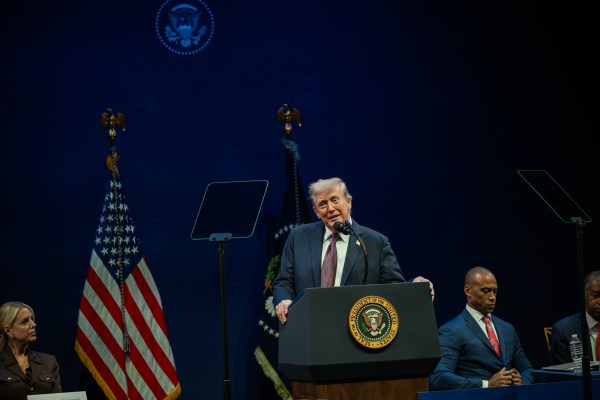
President Trump’s reaction to the pact has been nuanced. He has not openly condemned it but has used it as a point of leverage to reinforce his administration’s foreign policy priorities. During a recent press briefing, President Trump remarked on the “growing self-reliance” of American partners while also highlighting the need for “clear and transparent” alliances that do not create new security risks.
The agreement serves as a test of the Trump administration’s “America First” policy in the Middle East and South Asia. It challenges the long-held assumption of an unbreakable U.S. security commitment and underscores the need for Washington to adapt to a multipolar world. The pact could also influence U.S. relations with India, a key partner in South Asia that has expressed concerns about the agreement’s potential impact on regional security.
In conclusion, the Pakistan-Saudi defense pact is a landmark event that reflects a changing geopolitical landscape. While President Trump’s administration has yet to issue a definitive statement on the matter, its cautious approach and underlying commentary suggest that Washington is fully aware of the pact’s strategic importance and its potential to reshape the balance of power in two of the world’s most critical regions.
About The Author