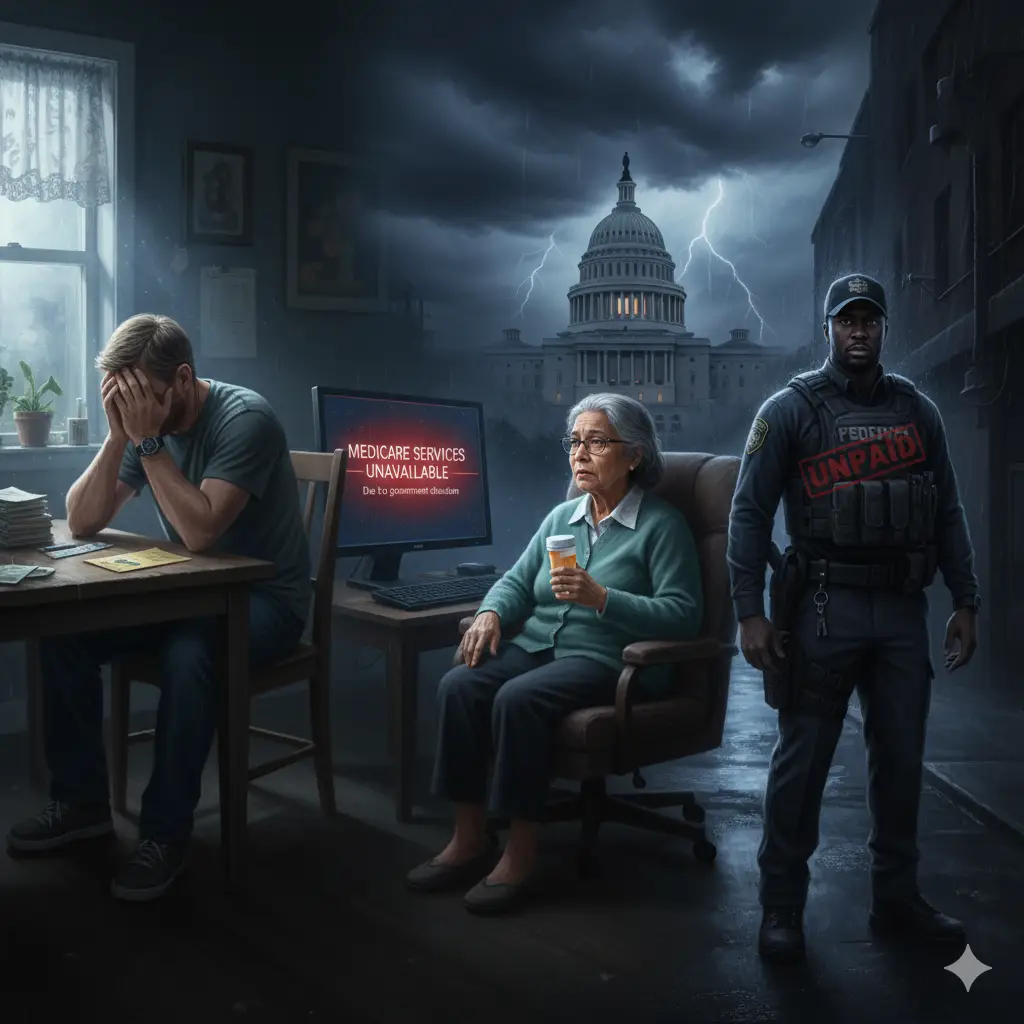
The White House warns that a Democrat-led shutdown push jeopardizes vital programs for veterans, seniors, and law enforcement, citing risks to benefits, healthcare, and public safety.
As the deadline to fund the government looms, the political brinkmanship in Washington is reaching a fever pitch. According to the White House, the current push by Democrats toward a government shutdown is not merely a political spat but a direct threat to the lives and livelihoods of millions of Americans, especially veterans, seniors, and those who rely on public safety services. The administration is urging Congress to pass a clean continuing resolution (CR) to keep the government functioning, arguing that the consequences of a shutdown are too severe to ignore. Here is a breakdown of the critical sectors at risk:
1. The Betrayal of Our Veterans
Veterans groups across the nation are sounding the alarm, warning that a shutdown would be catastrophic for those who have served. Essential services provided by the Department of Veterans Affairs (VA) would face immediate disruption:
- Life-Saving Programs at Risk:Vital initiatives like the Staff Sergeant Parker Gordon Fox Suicide Prevention Grant Program and the Supportive Services for Veteran Families (SSVF) Program—which combats veteran homelessness—face immediate funding gaps if extensions are not passed.
- Benefits Delays: Claims processing, appeals, and crucial benefits decisions would stall, forcing veterans and their families to wait even longer for the financial support they have earned. The Vietnam Veterans of America noted that every day of delay means “momentum toward solving the suicide crisis is lost.”
The message from groups like the American Legion and AMVETS is clear: this is not just about bureaucracy; it is about protecting lifelines for our nation’s heroes.
2. Jeopardizing America’s Seniors
For older Americans living on fixed incomes, a government shutdown introduces needless anxiety and financial hardship. The Association of American Mature Citizens (AMAC) has explicitly urged Congress to act, highlighting the following threats:
- Social Safety Net Disruption: Services that seniors rely on, including assistance from Social Security offices and Medicare support, would be jeopardized by backlogs and service disruptions.
- Healthcare at Home: A crucial program—the Acute Hospital Care at Home Initiative—which allows low-income and Medicare patients to be treated at home rather than in a hospital, is set to expire without reauthorization, putting millions of patients at risk.
The administration contends that putting these essential programs at risk is an unreasonable price to pay for political demands.
3. Threat to Public Safety and Law Enforcement
The threat of a shutdown also directly undermines public safety and the rule of law.
- Federal Law Enforcement Without Pay: The National Association of Police Organizations (NAPO) warned that a funding lapse would force federal law enforcement officers to put their “lives on the line without getting paid,” increasing stress on their families and undermining their vital work in combating violent crime, drugs, and guns.
- Prison Security at Risk: The Council of Local Prisons noted that Federal Bureau of Prisons (BOP) staff, who perform difficult and essential work, would be required to work without pay. This jeopardizes institutional security and public safety nationwide, as correctional facilities must remain fully operational 24/7.
- Lapse in Cyber Protection: Key programs like the Cybersecurity Information Sharing Act of 2015 (CISA 2015)—vital for protecting critical infrastructure—also risk expiring, leaving the nation more vulnerable to evolving cyber threats.
The Call for Stability
Beyond these direct impacts, a shutdown also threatens economic stability. The National Flood Insurance Program (NFIP) is set to expire, which could disrupt tens of thousands of home sales. Furthermore, essential programs like WIC (Women, Infants, and Children) risk running out of funding, impacting millions of low-income mothers and children.
Organizations representing federal employees, small businesses, and farmers are all urging Congress to prioritize a clean CR to maintain stability and predictability. The White House maintains that the path to continued success lies in fulfilling Congress’s core responsibility: keeping the government open for the people it serves.
Disclaimer: This blog post is based on general information about this topic, and it may be inaccurate or inefficient.
About The Author