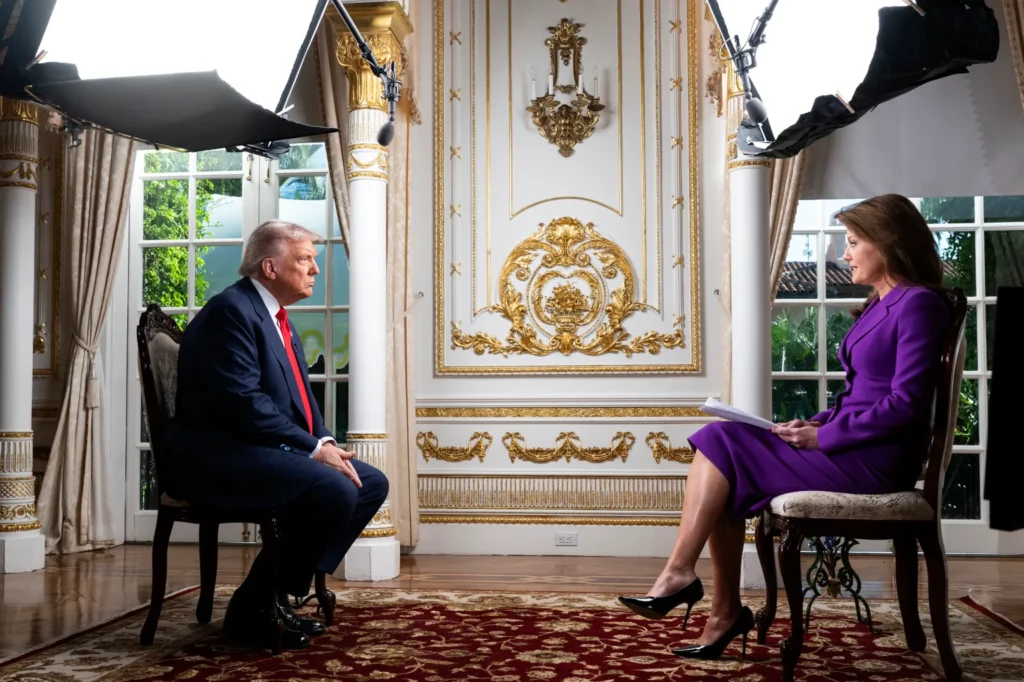
Did Trump achieve the “Greatest Nine Months” in history? We break down the contentious Trump 60 Minutes interview, covering his claims on the economy, Trump on Supreme Court tariffs, Trump on the Obamacare fix debate, and the government shutdown standoff.
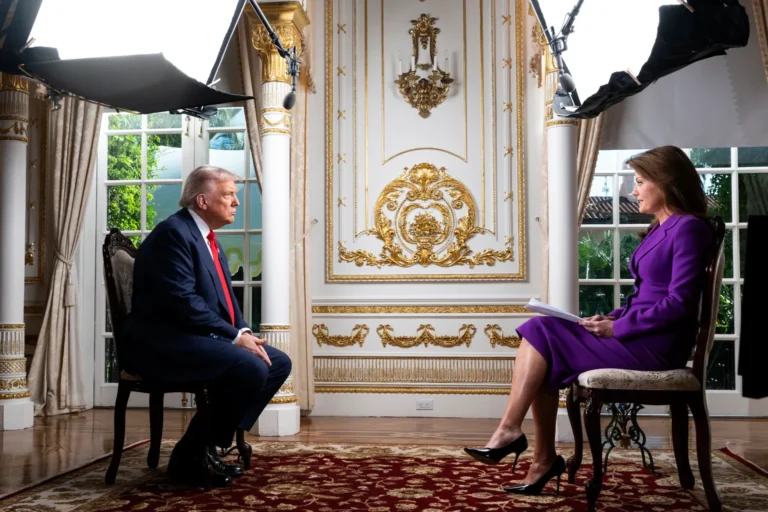
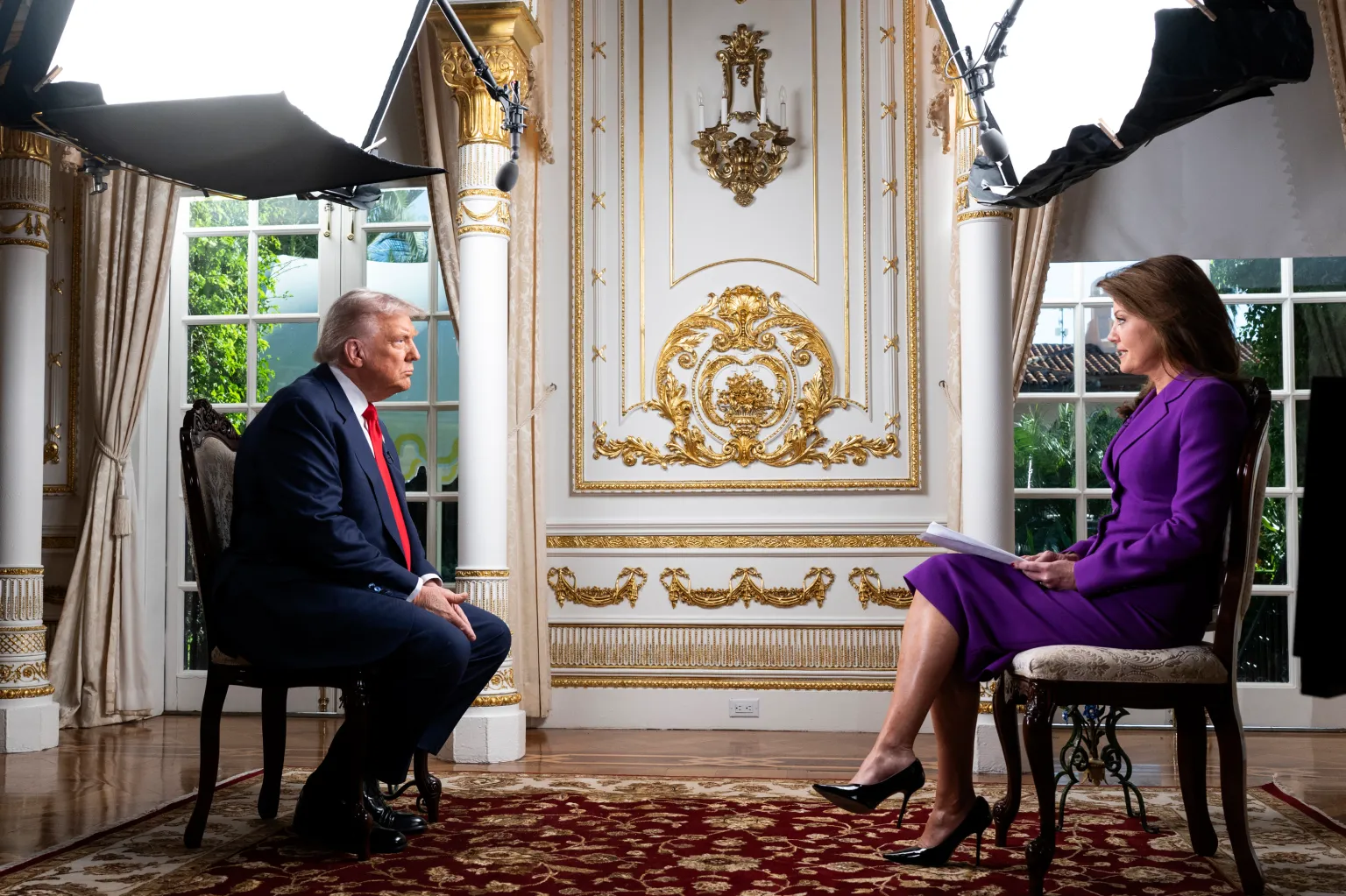
When President Donald Trump sat down for his in-depth 60 Minutes interview with Norah O’Donnell, he didn’t mince words. He declared that his initial run was already the “greatest nine months in the history of the presidency.” That’s a bold claim, but the White House used the platform to hammer home its major achievements and draw sharp contrasts with Democrats over the ongoing government shutdown.
The interview was a fast-paced conversation hitting on key areas from the economy to healthcare to foreign policy, often framed by the idea that his administration was being held back by political obstruction. We broke down the major points to see what the president claimed and what it means for the country moving forward.
The Economic Scorecard: Stocks, 401(k)s, and Tariffs
One of the central pillars of the administration’s argument for the “Greatest Nine Months” claim is the economic performance, particularly in the stock market. The president repeatedly linked this prosperity directly to his trade policies.
He was quick to point out that the stock market’s highest-ever Trump figures and soaring 401(k) values were direct results of his approach to international trade. For the president, the economy wasn’t just healthy; it was experiencing an unprecedented boom driven by policies that prioritize domestic industries.
The “Most Important” Case for the Supreme Court
This economic argument culminated in a striking statement regarding the role of tariffs. He claimed that the legal battle surrounding tariffs was “the most important subject discussed by the Supreme Court in 100 years.”
This highlights how central tariffs are to his entire economic worldview. In his mind, the ability to impose tariffs is a powerful and necessary tool, not only for negotiating with rivals but also for fueling American financial growth. He presented the case, which touches on the separation of powers and trade authority, not as an obscure legal matter, but as the underpinning of the nation’s newfound economic strength. It showed exactly why the Trump on Tariffs Supreme Court case matters to his administration.
The Shutdown Standoff: Negotiating with Democrats
At the time of the interview, the government was in the middle of a lengthy partial shutdown, a situation the president placed squarely on the shoulders of the opposing party. He expressed frustration that Republicans were voting “almost unanimously to end it” while Democrats remained unified in opposition.
His description of the political stalemate revealed his intense frustration with Washington’s mechanics. He claimed that Democrats had “lost their way” and were refusing to let the government open purely for political leverage.
This frustration led him to endorse a drastic procedural move to break the gridlock: the nuclear option filibuster. This refers to eliminating the Senate rule that requires a 60-vote majority to end debate (the filibuster) on legislation. For the president, ending the filibuster would solve the legislative bottleneck, allowing his administration to pass its full agenda, including border wall funding and a new healthcare plan. He implied that if the Democrats continue to stonewall, the Senate majority should simply change the rules to force progress.
The Price of a Healthcare Fix
The shutdown debate quickly bled into the perennial issue of healthcare. The president reiterated that Obamacare is terrible, calling it “bad healthcare at far too high a price,” and insisted that he would be “willing to work with the Democrats on it.”
However, the collaboration comes with a non-negotiable price tag, which is directly tied to the border debate. When discussing a potential Trump-on-Obamacare fix, he drew a hard line, stating he would not agree to a deal that includes what he termed as “money to prisoners, to drug dealers, to all these millions of people that were allowed to come in with an open border from Biden.” In his view, Democrats are attempting to use the shutdown and healthcare as instruments of “extortion” to secure funding for programs he views as fundamentally flawed and dangerous to the country.
This highlights the high-stakes political poker being played. He is offering a bipartisan fix for a huge domestic problem, but only if Democrats drop demands that he deems politically and ethically unacceptable, particularly concerning immigration and border security.
Law, Order, and the Global Stage
The conversation moved beyond domestic policy and into two areas where the president has consistently taken an uncompromising stance: enforcing domestic security and navigating a competitive world.
Border Security and Law Enforcement
On Trump’s illegal immigration policy, the president stuck to his hard-line position, defining the policy in stark, black-and-white terms: “You came into the country illegally; you’re going to go out.”
However, he immediately followed this with a crucial nuance: “We’re going to work with you, and you’re going to come back into our country legally.” This “out-and-back” approach is the core of his proposed immigration strategy: a clear commitment to the rule of law coupled with a potential, though highly restricted, pathway to legal reentry.
The president also touched on domestic law enforcement, making the controversial claim that if necessary, he would send the Army or the Marines into “Democrat-run cities” experiencing high crime rates. He tempered this by saying he hadn’t “felt we needed it,” but the comment reinforced his image as a president willing to use federal power to override local governance to enforce order. He also used the interview to hit on the dangers of drug trafficking and illegal border crossings, citing Venezuela for having “emptied their prisons” and “insane asylums into the United States of America.” This narrative, linking poor governance abroad to domestic security concerns, is a powerful and frequently used argument for tightening border controls.
H3: The Worldview: China, Gaza, and Nuclear Weapons
The foreign policy section of the interview offered several insights into the president’s worldview.
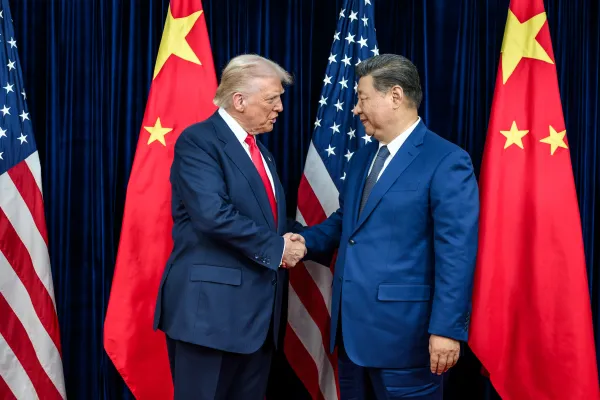
On Trump on China relations, he described the two powers as being in a fiercely “competitive world,” where both are a “threat to them, too.” This acknowledges a genuine strategic rivalry, but he believes the relationship must ultimately be defined by pragmatic cooperation: “I think we can be bigger, better, and stronger by working with them as opposed to just knocking them out.” This sets the stage for the transactional, deal-making approach seen in the recent Busan summit.
He also provided an update on the conflict in the Middle East, calling the ceasefire in Gaza “very solid” and warning that Hamas “could be taken out immediately if they don’t behave.”
Finally, he addressed the need for nuclear weapons testing, arguing that because the U.S. is “the only country that doesn’t test,” the policy should be reviewed. This statement reinforced his transactional view of military strength, suggesting that arms control should only be addressed from a position of parity, not unilateral restraint.
Conclusion: Looking Ahead
The Trump Presidency’s Greatest Nine Months claim, while bombastic, served its purpose in the 60 Minutes interview: it allowed the administration to define its narrative around economic success and unwavering resolve on law and order.
The entire conversation was a preview of the high-stakes political confrontations yet to come. With the government shut down, the battle over the nuclear option filibuster looming, and core issues like healthcare still unresolved, the next three years promise to be just as contentious and news-making as the first nine months the president claimed as the “greatest in history.”
⚠️ Disclaimer
The content of this blog post is provided for general informational and political commentary purposes only. It is based on publicly available excerpts and summaries of President Trump’s “60 Minutes” interview. This analysis reflects the author’s interpretation of the political discourse and should not be relied upon as a substitute for official White House documentation or independent journalism. We make no warranties regarding the complete accuracy, reliability, or future political outcomes implied by the statements discussed herein.
About The Author